Jordy.
From the hillsides of Comuna 13 to a small room in Maryland.
"I don't paint what a place looks like. I paint what it could look like once it decides to change."
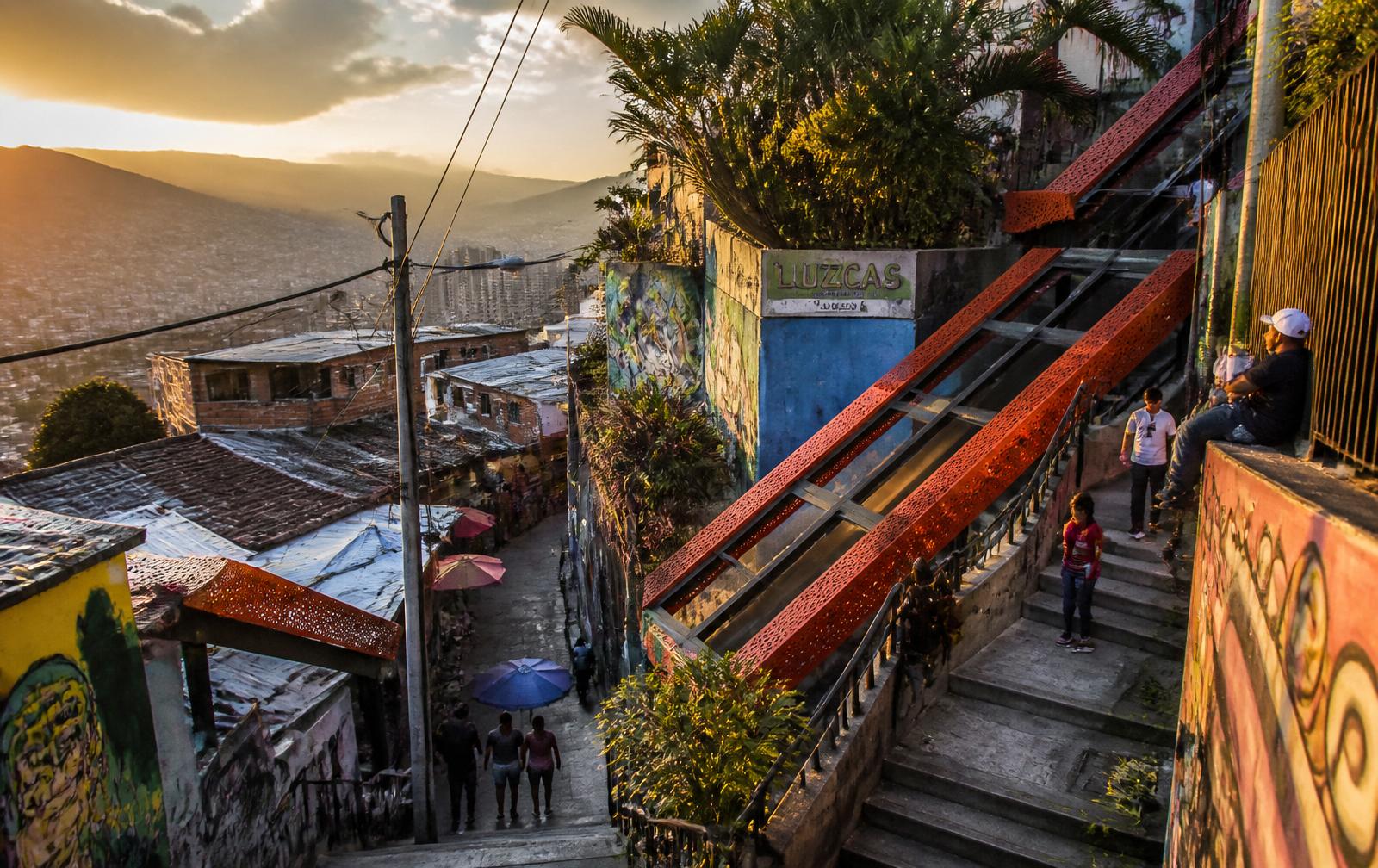
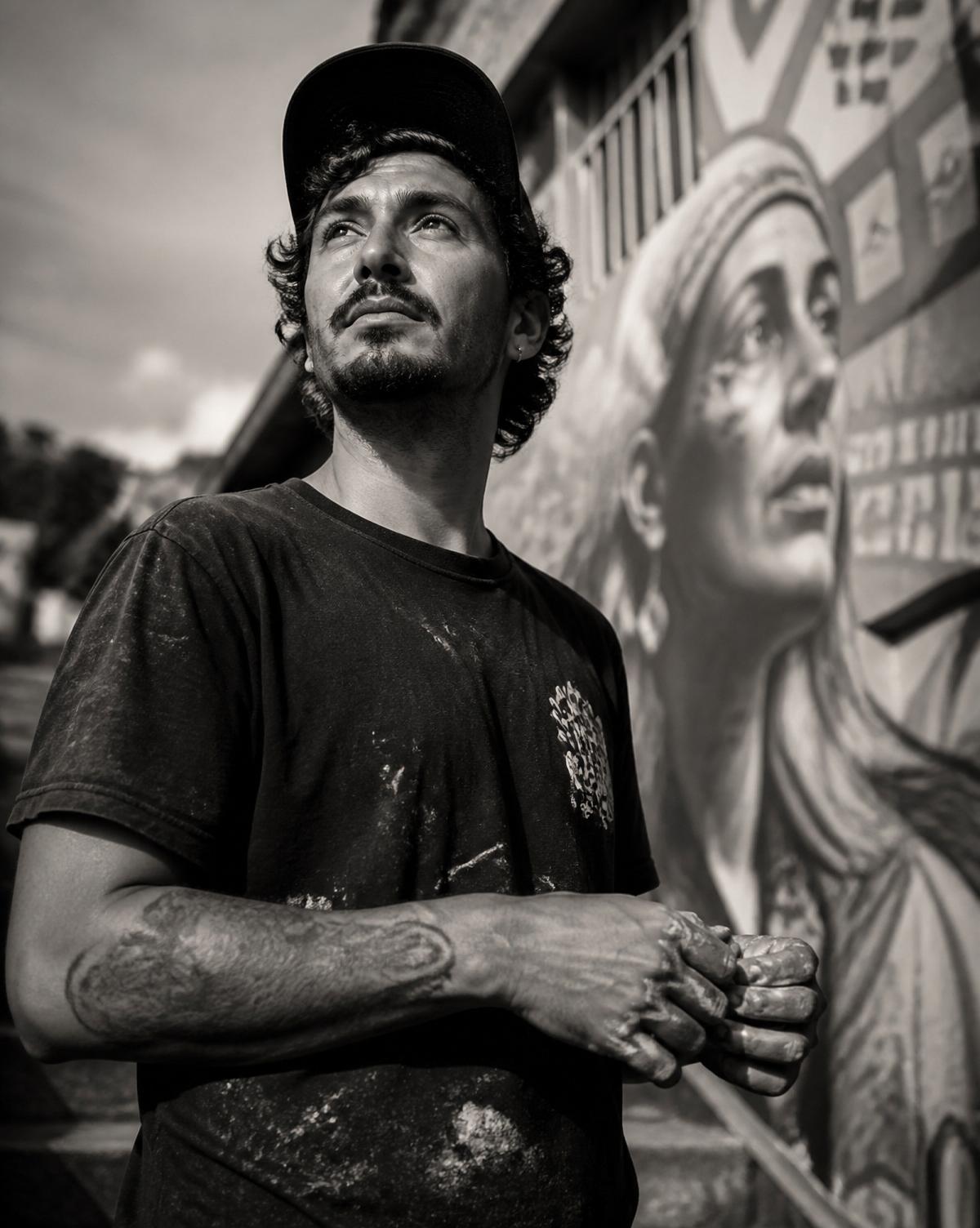
Jordy was raised in Comuna 13, on the western hillside of Medellín — a neighborhood that, during his childhood, was one of the most difficult in Colombia. He learned to draw before he learned the routes his mother told him to avoid.
When public art arrived in the barrio, so did he. He painted staircases, water towers, and doorways. He painted women mostly — mothers, grandmothers, the neighbors who fed him. He gave them the sky he wanted for them: gold, cobalt, the color of freedom.
In 2016 he opened his own studio, one of the first dedicated art galleries in Comuna 13. Three years later he unveiled Pachamama, the sculpture that now stands at the heart of the community and welcomes visitors from around the world.
Today Jordy is one of Colombia's most quietly influential contemporary artists. His work has entered private collections across four continents, and his practice continues to celebrate Afro-Latin heritage, feminine beauty, wildlife, freedom, and the hope that a neighborhood — or a person — can be remade.
Timeline.
Comuna 13
Comes of age in one of Medellín's most transformative decades, watching public art take root as a form of resistance and reclamation.
First Murals
Begins painting the walls of Comuna 13. His female figures — quiet, monumental — become fixtures of the barrio.
Founding Studio
Opens one of the first dedicated art galleries in Comuna 13, a space for local artists to be seen on their own terms.
Pachamama
Unveils his sculpture Pachamama — an homage to Mother Earth and to the women of the barrio. It becomes a cultural landmark of the community.
International Recognition
Works enter private collections across Europe, North America, and Asia. Featured in cultural documentaries on Medellín's renaissance.
Highbridge
Opens his first permanent United States presence at Highbridge Art Gallery in Bowie, Maryland.